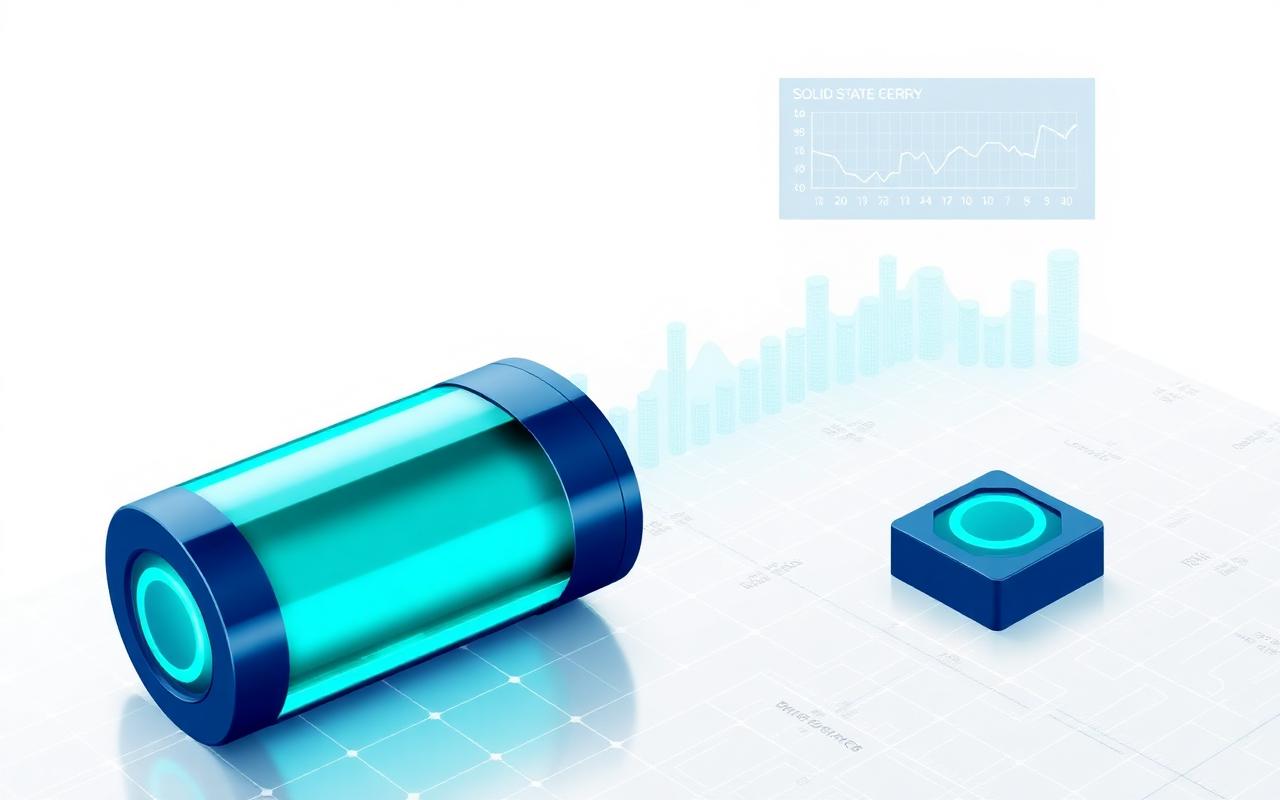
Why white-space is hard in batteries
Solid-state battery filings have tripled in five years. Naive landscape maps look saturated — but a large share of that density is defensive filings around a small number of chemistries. Genuine white-space exists, and it is commercially valuable, but you need composition-aware retrieval to see it.
A composition-aware approach
We combine CPC/IPC classification with LLM-grounded extraction of composition ranges (mol%, wt%), electrolyte type (oxide, sulfide, polymer, halide), and cell architecture. That lets us cluster filings by chemistry-plus-architecture rather than by keyword, and surface regions where filing density is low but commercial interest (based on funding, publications, and pilot lines) is high.
Findings
Two under-claimed regions stood out in Q1 2026: Na-ion cells with fluorinated polyanionic cathodes above 3.8 V, and Li-metal cells using halide-sulfide composite electrolytes with defined grain-boundary engineering. Both areas have credible academic momentum and thin patent coverage from the incumbents.