01
SEP Screening
Identify patent families potentially relevant to a standard or technology area through portfolio classification and retrieval. A screening result is a research candidate, not an essentiality finding.
Hashi IP Solutions · Standards intelligence
Identify the Patents That Matter to Standards.
Identify potential Standard-Essential Patents across your portfolio through structured patent screening, technical standards analysis and claim-to-specification evaluation.
Hashi IP Solutions combines SEP expertise, standards intelligence, AI-assisted patent analysis and expert technical review to help patent owners, licensing teams and technology companies evaluate patent relevance and potential essentiality across standards and releases.
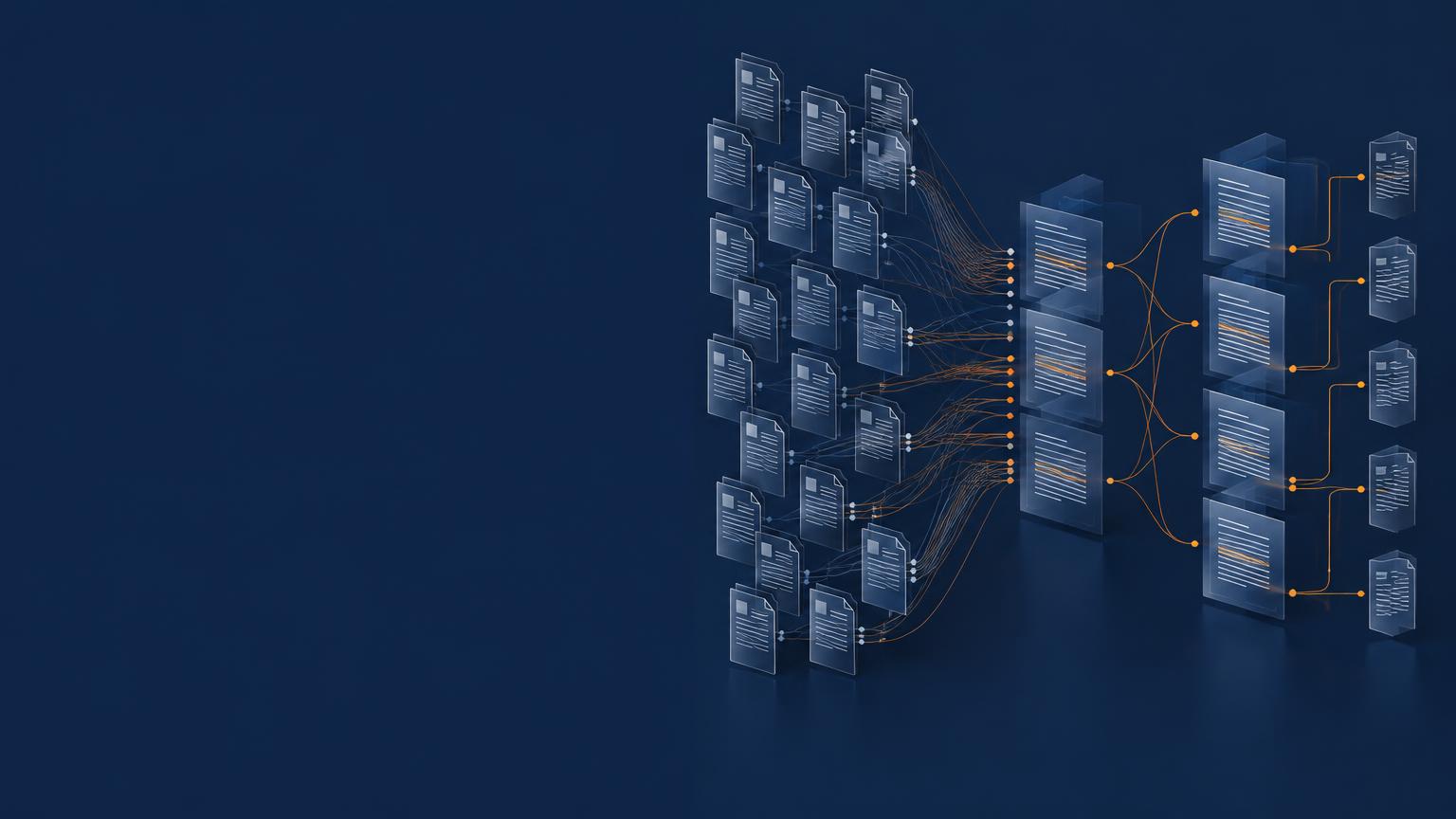
Conceptual portfolio-to-standard illustration · Not an essentiality finding
The portfolio decision
Portfolios covering wireless communications, multimedia, semiconductors and connectivity can contain standards-related technologies. Identifying potential essentiality requires more than titles, abstracts, keywords or declaration databases.
Move from broad screening to technically supported assessment by asking:
Three different levels of work
SEP identification examines claims against relevant specifications to assess whether claimed features may be necessary to implement a standard within a defined scope.
Identify patent families potentially relevant to a standard or technology area through portfolio classification and retrieval. A screening result is a research candidate, not an essentiality finding.
Examine selected claims against potentially relevant specification requirements. Identify promising correspondence, missing evidence and candidates for deeper assessment.
Assess claim limitations against applicable requirements with documented technical reasoning, mandatory/optional-feature analysis, evidence references and expert review.
A patent is not necessarily standard-essential because it relates to a standard, mentions a standard or appears in an IPR declaration database. Essentiality requires claim-level technical analysis against applicable requirements, within a defined scope; it is not a universal legal determination.
Our services
A
Prioritise portfolios for deeper SEP analysis.
B
Establish a traceable relationship between patent claims and specification requirements.
C
Support licensing and portfolio evaluation with scoped technical assessments for further legal review.
D
Identify families that warrant investment in claim charting, licensing assessment or legal evaluation.
Standards coverage
Exact standards, releases, technical areas, source availability and assessment depth are agreed for each engagement. Coverage is not identical across every domain, and listing a standard does not imply an identified SEP portfolio.
2G/3G, LTE, LTE-Advanced, 5G NR and 5G-Advanced; relevant 3GPP specifications and ETSI standards. Scope may address RAN radio interfaces or SA/CT architecture and protocols. Emerging 6G work is assessed as research, study or draft material—not automatically as adopted normative requirements.
IEEE 802.11, Wi-Fi 5, 6, 6E and 7, and relevant IEEE 802 wireless specifications. Assess the applicable specification and implementation scope rather than a marketing label alone.
AVC/H.264, HEVC/H.265, VVC/H.266, AV1, MPEG audio/video and relevant DVB specifications. Codec references do not imply a particular licensing position or that any portfolio contains essential claims.
JEDEC DDR, LPDDR, HBM, GDDR and relevant memory or semiconductor interface specifications, subject to agreed source availability and technical scope.
Qi, AirFuel and relevant power-transfer specifications. Identify the selected specification, version and applicable requirements before interpreting candidate claims.
OPC UA / IEC 62541, Bluetooth, UWB, Matter and other agreed industrial and connectivity specifications, with explicit treatment of optional features and profiles.
Our methodology
Five stages connect portfolio screening to traceable analysis, with the depth of each stage set by the engagement.
Agree the portfolio, technology areas, standards organisations, releases and versions, business objectives and assessment depth. Record the source status and scope exclusions.
Use classifications, keyword and semantic retrieval, family analysis, technology mapping, standards-related sources and portfolio filtering to select candidates for investigation.
Examine independent claims and limitations against relevant clauses, technical requirements, mandatory/optional features and the selected release and version.
Review correspondence, mapping rationale, source references and unsupported or ambiguous limitations. Apply a reviewer-based quality process appropriate to the project.
Provide scoped candidate lists, mapping tables, assessments, specification references, portfolio findings and recommendations for further analysis. Screening and detailed assessment remain distinct outputs.
Traceable technical reasoning
A useful assessment shows its source chain and preserves uncertainty—not just a match between two technical phrases.
Family consolidation · Technical scope
Selected claims · Individual limitations
Source status · Release · Version
Clauses · Mandatory / optional features
Evidence · Rationale · Expert review
AI-assisted. Expert-validated.
AI accelerates the identification and analysis process. Expert technical review validates the evidence and reasoning behind each assessment.
AI does not independently determine legal essentiality. Ambiguous correspondence and missing evidence require review, not automatic approval.
Business applications
Identify potential assets for further claim charting, licensing strategy and commercial evaluation.
Prioritise standards-relevant families for deeper technical and commercial assessment; no licensing revenue is guaranteed.
Evaluate standards-related portfolios during transactions, with explicit coverage and evidence limitations.
Organise portfolios and evidence for further evaluation under the relevant pool’s requirements. Identification does not guarantee acceptance.
Bring structured technical intelligence to discussions with potential licensees, without treating research as an infringement conclusion.
Support legal teams with technical analysis, evidence organisation and mapping. Litigation opinions and legal conclusions require appropriate legal review.
Help IP leaders identify candidates and prioritise further portfolio analysis around their business objectives.
What clients receive
Scope-specific outputs that make portfolio findings and technical reasoning reviewable.
A structured list of families potentially relevant to selected standards.
Candidate families mapped to standards, releases and technology areas.
Technical correspondence between selected claims and specification sections.
Scoped assessment of limitations against applicable technical requirements.
Documented reasoning and references, including unresolved limitations.
Traceable sections, clauses and release/version references.
Executive summary of screening results, coverage and key findings.
Families requiring further technical analysis, charting or licensing evaluation.
Family details, mapping tables and references in agreed formats.
Deliverables depend on the agreed engagement. Broad screening does not automatically include full claim charts or detailed essentiality analysis for every patent.
Why Hashi IP Solutions?
Patent expertise, protocol understanding and standards intelligence—connected through structured investigation and documented technical review.
Connect patent claim analysis with the technical context of the selected specifications.
Use family consolidation and AI-assisted semantic screening to focus expert review.
Document source status, version, applicable clauses and the rationale behind each correspondence.
Structure findings around licensing, portfolio and transaction objectives—not unsupported scores.
Industries served
Support for portfolio holders, equipment and device manufacturers, chipset companies, network providers, licensing programmes, IP law firms and corporate IP teams.
LTE, 5G NR, 5G-Advanced, NTN, access and network technologies; emerging 6G research assessed separately.
Memory, HBM, DDR, LPDDR, interfaces and standards-related chiplet technologies.
Mobile devices, connected products, wireless technologies and multimedia systems.
C-V2X, connected vehicles and relevant wireless communication technologies.
AVC, HEVC, VVC, AV1, MPEG and related multimedia technologies.
Wi-Fi, Bluetooth, UWB, industrial connectivity and IoT technologies.
Complementary, not interchangeable
| Service | Objective | Focus |
|---|---|---|
| SEP Identification | Find families and claims potentially relevant to a defined standard. | Portfolio screening and candidate identification. |
| Essentiality Analysis | Evaluate selected claim limitations against applicable standard requirements. | Detailed technical analysis and documented rationale. |
| SEP Claim Charting | Present claim-to-specification correspondence in a structured chart. | Element-by-element analysis and traceable specification references. |
| Patent-to-Product Mapping | Investigate claims against specific products or implementations. | Product evidence, technical implementation and claim mapping. |
For a structured element-by-element evidence chart, explore SEP Claim Charting.
FAQs
SEP identification finds patent families and claims that may be relevant to implementing a defined technical standard. It moves from portfolio screening to candidate investigation; a potential candidate is not automatically an independently verified essential patent.
Define the standard, version and portfolio; retrieve and screen families; examine selected claims against specification requirements; then validate the technical evidence and reasoning. The agreed depth determines whether an output is screening, candidate identification or detailed assessment.
Screening filters families for potential standards relevance. Essentiality analysis assesses individual claim limitations against applicable requirements and documents correspondence, evidence and uncertainties. Screening alone does not establish essentiality.
Review selected claims, the applicable specification and release, and whether each limitation relates to necessary requirements within the defined implementation scope. Optional or conditional features, alternative implementations and unresolved limitations require careful analysis and appropriate legal review.
Declared patents may be included in the agreed portfolio. IPR declarations are a source of leads, not proof of essentiality, validity or infringement. Independently analysing claims and specification requirements remains necessary.
A portfolio-scale engagement can consolidate families, classify technologies and screen for potential relevance, then prioritise selected candidates. Full claim-level analysis of every family is a separate scope, not an automatic inclusion.
An engagement may address relevant 3GPP, ETSI, IEEE, multimedia, JEDEC, wireless-power and industrial-connectivity specifications. Exact standards, versions, source availability and technical depth are agreed individually; coverage is not identical across all domains.
5G analysis can be scoped to applicable adopted specifications and releases. Emerging 6G material must be distinguished as research, study or draft work versus adopted normative requirements. A 6G research correspondence does not establish essentiality to a final 6G standard.
Identification selects potentially relevant families and claims. Claim charting presents detailed element-by-element correspondence and specification references. These complementary services answer different questions; a candidate list is not a complete claim chart.
AI assists semantic retrieval, concept extraction, claim decomposition, specification matching, clustering and evidence organisation. Experts interpret claims and requirements, validate evidence and sign off reasoning. AI does not independently determine legal essentiality.
It can prioritise candidates for further charting, commercial evaluation and licensing discussions, and support due diligence or pool preparation. It does not guarantee revenue, pool acceptance, enforceability or a favourable legal outcome.
Share non-confidential portfolio context, approximate family count if known, standards or technology areas, target releases and business objectives. Agree an NDA and an appropriate transfer process before sharing sensitive documents; the initial enquiry requires no uploads.
Related services
Your next portfolio decision
Whether you are evaluating a patent portfolio, preparing a licensing programme, assessing standards-related IP assets or investigating potential essentiality across a technology domain, Hashi IP can help define a structured SEP identification and analysis engagement.
Scope your portfolio engagement
Share non-confidential portfolio context, relevant standards and business objectives only. Do not include sensitive patent documents, unpublished inventions or confidential technical details. Discuss an NDA and an appropriate transfer process before sharing sensitive material.
This form prepares an email draft to info@hashiip.com. Review and send it yourself; it does not automatically deliver your enquiry.