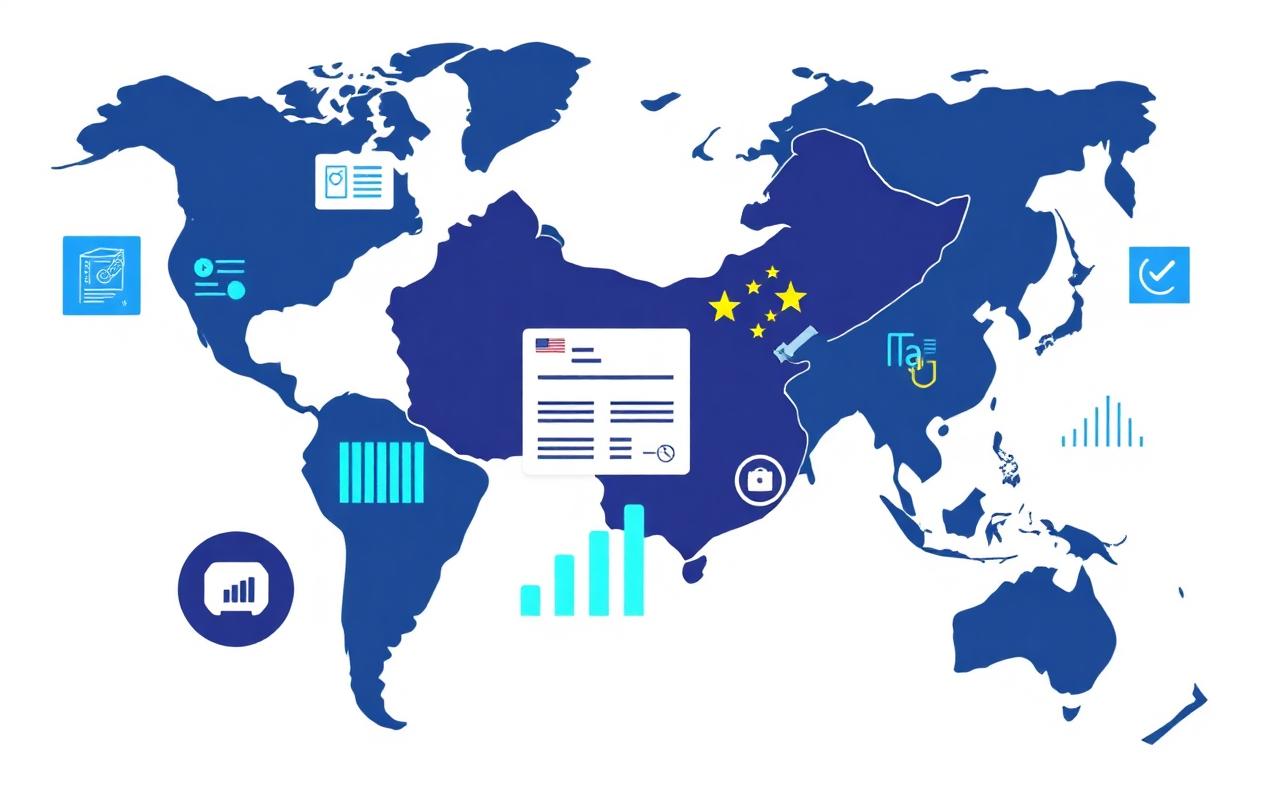
The last time cellular connectivity saw a paradigm shift this profound, Qualcomm built an empire. That was LTE. Now, Non-Terrestrial Networks are rewriting the rules again — and the patent race is already underway.
"NTN is not simply a connectivity market. It is becoming an IP ecosystem."
The LTE Precedent: When Waveforms Became Wealth
LTE was not merely a faster air interface. It replaced the circuit-switched inheritance of earlier generations with an all-IP architecture, moved the radio layer to OFDM-based transmission, flattened the network architecture, and redefined how scheduling, mobility and bearer management worked end to end. Those foundational choices had a consequence that is easy to miss in a purely technical retelling: they concentrated a large amount of durable, hard-to-design-around technology into a specification that every compliant device on Earth would eventually implement. Companies that had invested early in the underlying signal processing, modem architecture and protocol design found their research reflected in the standard itself — and, in the years that followed, in licensing programmes built on foundational technology IP. Qualcomm is the most cited example, but it was not the only beneficiary; a broad set of infrastructure vendors, chipset designers and research-heavy operators found that early contributions to a standardized paradigm translated into long-lived commercial positions.
The lesson is structural rather than anecdotal. When connectivity paradigms shift, foundational technology IP can become strategically important — not because patents multiply, but because a new set of technical problems must be solved for the first time, and the solutions get written into a specification that the whole industry then implements.
"When connectivity paradigms shift, the patent landscape can shift with them."
NTN: The Same Playbook, A Much Bigger Stage
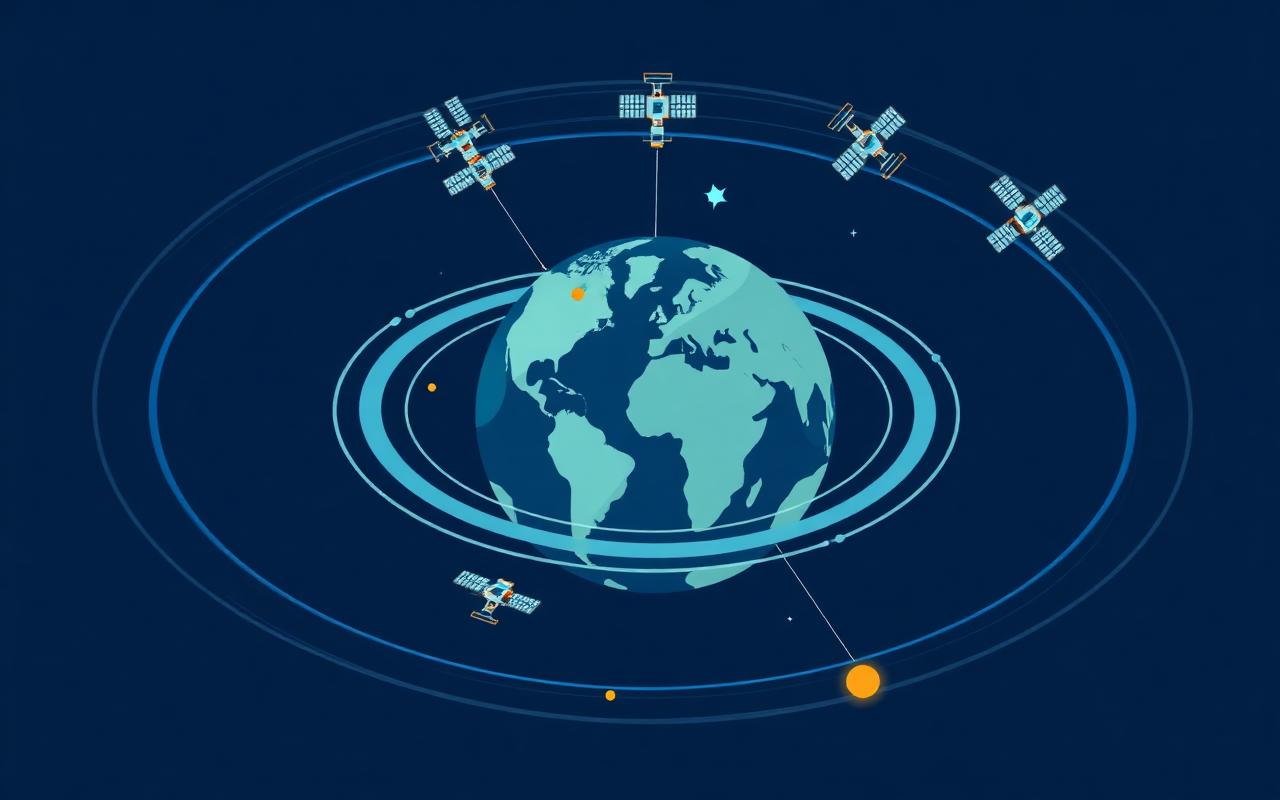
Non-Terrestrial Networks bring satellite and other non-ground platforms inside the 3GPP framework rather than alongside it. 3GPP Release 17 introduced the NTN foundation, defining how NR and IoT technologies operate over satellite links — including NR-NTN for broadband-class connectivity and NB-IoT/eMTC over satellite for low-power, wide-area use cases. Release 18 continued with enhanced NTN work, and Release 19 carries the evolution further as NTN is folded into the broader 5G-Advanced trajectory and, in time, into 6G discussions. The architectural options span transparent payloads, where the satellite behaves largely as a relay, and regenerative payloads, where network functions are hosted on board. Constellation choices matter too: LEO systems introduce fast-moving cells and frequent handovers, while GEO systems introduce very long propagation delay. What links these threads commercially is direct-to-device connectivity — the prospect of standard handsets, IoT modules and vehicles attaching to a satellite network without bespoke terminals — and the global coverage that follows from it.
- 01Release 17 — NTN foundation
- 02Release 18 — Enhanced NTN
- 03Release 19 — Further NTN evolution
- 045G-Advanced / future 6G
The Four Pillars of NTN Core Technology
NTN is best understood not as one technology but as four clusters of technical problems, each generating its own distinct engineering solutions — and therefore its own potential IP domains. For each pillar below, the chain runs from technical challenge, to the technology addressing it, to the areas where patenting activity may concentrate. None of this implies that any specific patent is valid, granted, essential or enforceable; those are separate questions requiring claim-level analysis.
01 — Waveforms
- Technical challenge: satellite propagation introduces large Doppler shifts, long and variable delay, and demanding link budgets.
- Technology: Doppler compensation, timing advance handling, frequency pre-compensation, flexible numerologies and CP-OFDM adaptation.
- Potential IP domain: Doppler compensation algorithms, modified waveform techniques and hybrid waveform approaches.
02 — Massive Connectivity
- Technical challenge: serving very large device populations across moving beams and constellation-scale topologies.
- Technology: multi-beam scheduling, NB-IoT NTN operation, random access adaptation, inter-satellite handover and congestion control.
- Potential IP domain: scheduling and access procedures, mobility signalling and load management under constellation dynamics.
03 — Core Network Architecture
- Technical challenge: adapting a terrestrial 5G Core to links that move, vary in latency, and may terminate on board a satellite.
- Technology: QoS handling, charging, user-plane anchoring, terrestrial-to-satellite mobility, regenerative and transparent payload architectures.
- Potential IP domain: 5G Core adaptation, session and anchoring strategies, and network function placement across space and ground segments.
04 — IP-Based Connectivity
- Technical challenge: long round-trip time, intermittent visibility and disrupted sessions degrade conventional IP transport behaviour.
- Technology: TCP optimization, performance-enhancing proxies (PEPs), session continuity mechanisms, security handling and non-3GPP access integration.
- Potential IP domain: transport and proxy techniques, continuity and re-establishment methods, and secure integration across access types.
- 01Technical challenge
- 02Technology
- 03Potential IP domain
Where Could the Real NTN IP Moat Sit?
It is tempting to look for the NTN moat inside a single layer — the satellite, the modem, the core network. The architecture suggests otherwise. An NTN service only works when the satellite segment, the network, the radio access layer, the chipset, the device or vehicle, and the application software all behave coherently. Much of the hardest engineering — and much of the most differentiated technical work — happens at the seams between those layers rather than inside any one of them.
- 01Satellite
- 02Network
- 03RAN / Radio
- 04Chipset / Modem
- 05Device / Vehicle
- 06Software / Application
The interfaces deserve as much attention as the layers: satellite ↔ network, network ↔ chipset, chipset ↔ vehicle, vehicle ↔ application, and NTN ↔ terrestrial network. Each interface carries its own synchronization, mobility, session and security problems, and each is a plausible location for technically significant filings.
"The strongest IP position may not sit in a single layer. It may sit at the technical interfaces that make the ecosystem work together."
Analysis that follows the interfaces
- Standards mapping
Connect patent claims and technical disclosures with specifications and clauses.
- SEP claim charting
Analyze potential relationships between claims and standardized functionality.
- Patent analytics
Map technologies, companies, filing activity and competitive positions.
NTN Is Becoming an IP Ecosystem
NTN is unusual in how many industries have to contribute technology for the system to function. That breadth is precisely why an NTN patent landscape drawn only from telecom filings will be incomplete.
Telecommunications
- Network architecture
- Protocols
- RAN
- Mobility
Semiconductors
- Chipsets
- Modems
- RF
- Signal processing
Satellite
- Infrastructure
- Payload
- Constellations
Automotive & software
- Vehicle connectivity
- Integration and connected services
- Orchestration and routing
- Intelligence and applications
"Patents can sit across every layer."
From Patent Counting to NTN IP Intelligence
Counting patent families is the easiest analysis to produce and the least useful to act on. A family count says nothing about whether the underlying applications were granted, how broad the surviving claims are, whether the claimed technique corresponds to normative specification behaviour, or whether it appears in shipping products. Public figures on NTN family counts, market size, CAGR, filing growth and company rankings circulate widely; where such numbers are used they should be attributed to the referenced analysis that produced them, and treated as directional indicators rather than proprietary findings or measures of patent quality.
- 01Patent landscape
- 02Technology clusters
- 03Companies
- 04Patent families
- 05Claims
- 06Standards
- 07Products
- 08Commercial relevance
The questions that actually drive decisions sit further down that chain — and each one requires a different analytical step.
What organizations may need to understand
- Who is filing around core NTN technologies?
- What technologies are being protected, and with what claim scope?
- Where are portfolios geographically and technically concentrated?
- Which technologies intersect with 3GPP specifications?
- Which claims may be relevant to specific products or architectures?
- Where are potential whitespace areas?
- Which companies are emerging as important players?
Explore Patent Analytics →
Move from family counts to claim-, standard- and product-aware NTN intelligence.
Explore Patent Analytics →Why Standards Matter in the NTN Patent Race
In a standardized ecosystem, technology travels a well-defined route from a company's laboratory into every compliant product. A technical proposal is submitted into a working group, discussed and revised through the standards process, and — if adopted — written into a specification. Around that process, participating companies disclose patents they believe may be relevant, and implementers then build products against the published specification. Understanding where a company's NTN filings sit along that route is far more informative than knowing how many filings it has.
- 01Technical proposal
- 02Standards discussion
- 03Specification
- 04Patent disclosure
- 05Product implementation
A critical caution applies here. A patent is not standard-essential merely because it relates to a standard, and a declaration made to a standards body is not an essentiality determination. Essentiality is a technical and legal assessment that requires reading the claim against the normative text of a specific specification release, limitation by limitation. Filing activity in an NTN technology area may indicate where a company is investing; it does not establish essentiality, validity or enforceability, and any conclusion of that kind requires further claim-level analysis.
Standards-focused analysis
- Explore Standards Mapping →
Map claims and disclosures to specifications, clauses and releases.
- Explore SEP Claim Charting →
Element-by-element charts built on cited specification text.
Who Should Be Watching NTN IP?
NTN cuts across more industries than any previous cellular extension, which means the set of organizations with an interest in its patent landscape is unusually wide.
Technology vendors
- Chipsets
- Modems
- Infrastructure
- Network technologies
Mobile network operators
- Satellite roaming
- Direct-to-device
- Connectivity strategy
- Licensing considerations
Satellite operators
- Payload integration
- Network interoperability
- Technology partnerships
- Standards
Automotive, semiconductor & investors
- Connected vehicles and vehicle-side implementation
- Modems, RF, signal processing, power optimization
- Technology landscapes and competitive positioning
- IP assets and emerging technology opportunities
What NTN Means for Commercial IP Strategy
For technology vendors, the practical questions are freedom-to-operate around densely filed NTN techniques, whether differentiation sits in implementation-specific engineering rather than in the standardized behaviour itself, how far vertical integration changes exposure across the stack, and which jurisdictions matter given where products are manufactured and sold. For mobile network operators, NTN raises satellite roaming arrangements, direct-to-device service design, dependencies on a small set of chipset and infrastructure vendors, and the licensing considerations that follow when a service relies on standardized satellite functionality.
By stakeholder
- Technology vendors — FTO exposure, implementation-specific differentiation, vertical integration, geographic scope.
- MNOs — satellite roaming, direct-to-device services, vendor dependencies, licensing considerations.
- Satellite operators — payload integration, spectrum coordination, service orchestration, ecosystem positioning.
- Investors — patent portfolios, standards activity, competitive IP and technology positioning.
For satellite operators, the strategic surface is payload integration with 3GPP network functions, spectrum coordination, service orchestration across space and ground segments, and positioning within an ecosystem where telecom vendors are becoming direct partners. For investors, NTN portfolios and standards participation are one input among many when assessing technology positioning — this article describes analytical considerations and does not offer investment advice.
The NTN Patent Questions Companies Should Be Asking
An NTN IP diligence checklist
- Who is filing around core NTN technologies?
- Which companies are building patent density, and in which clusters?
- Which technical areas are becoming crowded?
- Which patents may be relevant to standards?
- Where are potential IP whitespace areas?
- Which patents may matter to our product architecture?
- Where do telecom and semiconductor portfolios overlap?
- Where do automotive and connectivity patents intersect?
- Which NTN technologies should we monitor on an ongoing basis?
- Which patents require deeper claim-level analysis?
- Where should FTO analysis be considered?
- Which standards developments could affect our technology strategy?
Discuss Your NTN IP Strategy →
Bring your technology roadmap; we will frame the search, landscape and standards work around it.
Discuss Your NTN IP Strategy →Turn NTN Technology Intelligence Into IP Intelligence
Hashi IP Solutions works at the intersection of telecommunications engineering, standards analysis and patent intelligence. Our NTN-relevant capabilities are described below by what they do, not by what they promise.
Capabilities relevant to NTN
- Patent search
Identify relevant patent and technical disclosures.
- Prior art search
Investigate earlier disclosures around specific NTN inventions.
- Patent analytics
Map technologies, companies, filing activity and competitive positions.
- Standards mapping
Connect patent claims and technical disclosures with standards and specifications.
- SEP claim charting
Analyze potential relationships between patent claims and standardized functionality.
- SEP analysis
Assess portfolios against standardized functionality and licensing context.
- Patent monetization
Connect patent claims with product implementations and commercial pathways.
- Telecommunications industry practice
Sector context across 3GPP, RAN, core network and device technologies.
Talk to Hashi IP Solutions
Hyderabad, India — supporting clients across India, the United States, Europe and Asia.
Talk to Hashi IP SolutionsNTN Technology Areas to Watch
The areas below are worth monitoring from an IP perspective because they are where technical work is concentrating. They are not equally significant, and inclusion here says nothing about the volume, quality or essentiality of patents in any given area.
- 5G NTN · 6G NTN · NTN RAN
- LEO · GEO · inter-satellite connectivity
- Direct-to-device · NB-IoT NTN
- Satellite modems · Doppler compensation · timing advance
- Beam management · mobility · regenerative payloads
- NTN + automotive · NTN + IoT · NTN + AI
Building an NTN Technology Strategy?
Understand the patents, standards, competitors and technologies shaping the NTN ecosystem.
Discuss Your NTN IP Strategy
Or explore Hashi IP intelligence capabilities across search, analytics and standards.
Discuss Your NTN IP Strategy"The race to the sky is over. The race to understand — and own — the IP underneath it is just beginning."
Request an NTN IP intelligence discussion
Tell us about your NTN technology area and we will follow up with a scoped approach.
Frequently Asked Questions About NTN Patents
Frequently asked questions
NTN patents are patents and patent applications covering technologies used in Non-Terrestrial Networks — satellite and other non-ground platforms integrated into cellular systems. They span waveform and physical-layer techniques, access and mobility procedures, core network adaptation, payload architectures and transport-layer optimization.