01
Standards-Based Patent Landscape
Identify patent publications associated with selected specifications, releases and technology work items, documenting the basis of relevance.
Hashi IP Solutions · Patents / Standards / Technology
Decode the SEP Patent Landscape. Identify Technology Ownership. Strengthen IP Strategy.
Understand the competitive structure of standards-related portfolios across cellular and connectivity technologies. Our SEP patent landscape analysis maps patent activity, technology coverage, ownership patterns and competitive positioning to support licensing, portfolio development and technology decisions.
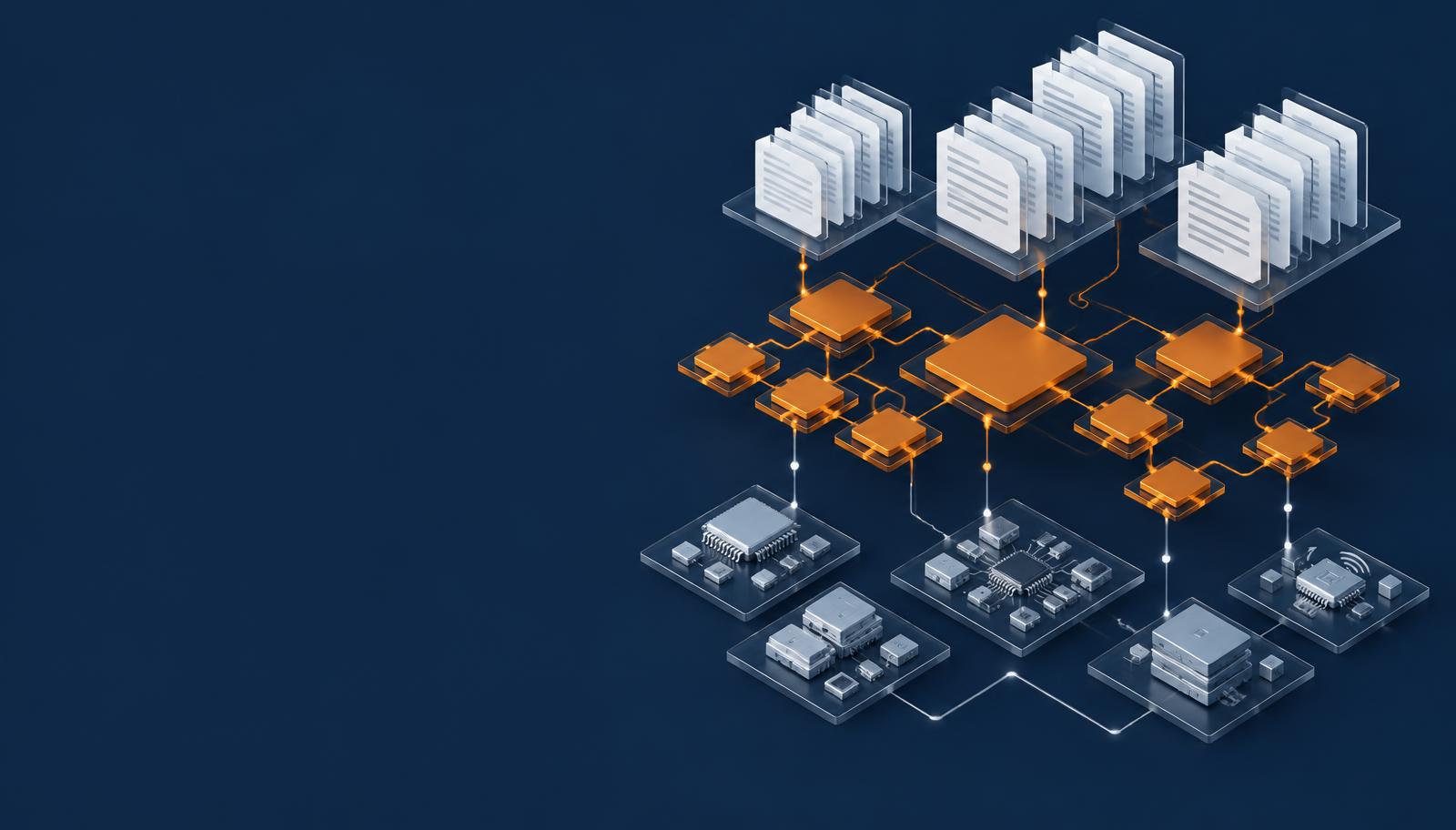
Illustrative portfolio architecture · not actual patent findings
An SEP Patent Landscape Service analyzes patent publications, patent families, ownership patterns, and technology coverage associated with selected technical standards. It combines patent research with standards and technology analysis to help organizations understand competitive positioning, portfolio distribution, and emerging opportunities across standards-driven technology markets.
For SEP owners, cellular contributors, equipment and device makers, chipset teams, automotive and IoT businesses, licensing teams, law firms, investors and corporate strategy leaders.
Research scope
01
Identify patent publications associated with selected specifications, releases and technology work items, documenting the basis of relevance.
02
Investigate cellular patent activity against technical specifications, working groups, releases and technology evolution.
03
Classify portfolios by technical feature, protocol layer and functional capability within a defined taxonomy.
04
Normalize applicant names and examine portfolio concentration and ownership changes where traceable in available records.
05
Compare selected organizations’ technology coverage and filing activity using consistent inclusion criteria.
06
Examine families, priority patterns, geographic coverage and filing trends without treating volume as patent quality.
07
Identify developing research themes and shifts in technical focus within the agreed dataset.
08
Translate the evidence into structured reports, comparative views and executive decision-support insights.
Technology coverage
RAN, physical layer, channel coding, MIMO, beamforming, scheduling, mobility and service-based core architecture.
AI-native air interfaces, integrated sensing and communication, NTN, spectrum, distributed intelligence and next-generation radio research. Emerging concepts are distinguished from adopted normative requirements.
OFDM, MIMO, carrier aggregation, radio resource management, handover and network optimization.
IEEE 802.11, Wi-Fi 6/7 and emerging Wi-Fi 8 work; MAC/PHY features, coexistence and efficiency, with source versions recorded.
NB-IoT, LTE-M, massive IoT, low-power connectivity and industrial wireless technologies.
HEVC, VVC, AVC, AV1 and transmission/compression technologies. Relevant specifications and declaration sources are evaluated individually.
V2X, cellular vehicle connectivity, automotive communication protocols and connected mobility.
Three intelligence layers
ASSETS & OWNERSHIP
SPECIFICATIONS & RELEASES
FEATURES & FUNCTIONS
Source correlation · Expert classification · Consistent comparison
Portfolio intelligence for a defined business decision
A declaration or connection to a specification does not establish that a patent is legally essential or valid. Landscape correlations are not formal essentiality determinations, infringement findings or freedom-to-operate conclusions.
Methodology
01
Agree standards, technologies, companies, jurisdictions, releases and the business questions.
02
Identify publications, consolidate families and review available standards-related declarations.
03
Correlate disclosures with specification versions, features and a documented taxonomy.
04
Evaluate filing, ownership, distribution, technical coverage and relative positioning.
05
Deliver technology maps, ownership views, comparative analytics and executive insights.
The scope and depth of technical mapping, claim-level analysis and standards correlation are defined according to the agreed research objectives and available source material.
Business intelligence & deliverables
A structured publication and patent-family dataset, with scope and inclusion criteria.
Identified assets organized by selected technology areas and standards-related features.
Normalized assignee distribution, portfolio relationships and source-qualified ownership observations.
Correlations to selected specifications, releases and technical features, with traceable references.
Comparable views of selected companies and their technology coverage.
Priority, family, jurisdiction and filing trends with definitions and data cut-off dates.
Comparatively less-explored areas for further technical and commercial validation—not FTO clearance.
Visual analysis, observations, assumptions, limitations and strategic decision inputs.
Business applications
Locate technical areas where portfolio coverage may be strengthened.
Identify companies and technology segments for subsequent patent-level licensing investigation.
Review patent activity and candidate white spaces alongside engineering priorities.
Benchmark selected organizations across relevant standards and technical segments.
Provide landscape inputs for portfolio and technology evaluation, alongside separate legal and valuation review.
Inform initial opportunity assessment without predicting royalty income or infringement.
Understand where patent activity and standards research attention converge.
Why Hashi IP Solutions
Patent research integrated with technical documentation and version-specific standards context.
3GPP-focused cellular intelligence and feature-level taxonomies, rather than keyword totals alone.
Consistent analytical definitions and traceable sources for competitive comparisons.
Research questions and reporting depth tailored to IP, licensing, strategy and R&D teams.
Related services
Element-level technical evidence for separately scoped patent-to-standard analysis.
Broader technology, competitor and patent trend intelligence.
Strategic portfolio assessment, prioritization and management support.
Focused patent and standards analysis for compression and multimedia technologies.
Technical correlations between patent disclosures and standards requirements.
Focused evidence searches for defined patent and technology questions.
Scope your engagement
Whether you are evaluating a 5G or 6G segment, benchmarking portfolios or developing a licensing strategy, Hashi IP Solutions can structure research around your business objectives.
Share non-confidential context only. Agree a suitable sharing process before sending unpublished inventions or sensitive portfolio material.
info@hashiip.comQuestions & answers
It is a structured analysis of patent families, ownership and technology coverage associated with selected standards. It provides competitive and portfolio intelligence; inclusion does not establish legal essentiality or validity.
We define the scope, develop and curate a patent dataset, correlate technical disclosures with standards documentation, compare portfolios and deliver source-qualified reports and data.
It adds standards specifications, releases, technical features and available declaration information to patent research. Standards correlation is distinct from a formal claim-by-claim essentiality determination.
Relevant disclosures are classified against agreed technical features and version-specific specifications. Deeper claim-level analysis is separately scoped according to the objectives and available material.
It can identify prominent assignees within the defined dataset and examine traceable ownership records. Findings depend on source quality and inclusion criteria; volume does not establish essentiality, quality or a company’s share of all SEPs.
It highlights technology coverage, portfolio concentration and organizations for further research. Licensing decisions require additional patent-level, product, essentiality and legal analysis; a landscape does not promise revenue or establish infringement.
The agreed scope may include a family database, technology matrix, ownership analysis, standards correlations, benchmarking, filing trends, candidate white spaces and an executive report with methodology and limitations.
Companies can compare 5G feature coverage and evaluate emerging 6G patent themes for R&D and portfolio planning. Evolving 6G research and draft material are clearly distinguished from adopted standards.